Barolo
Barolo
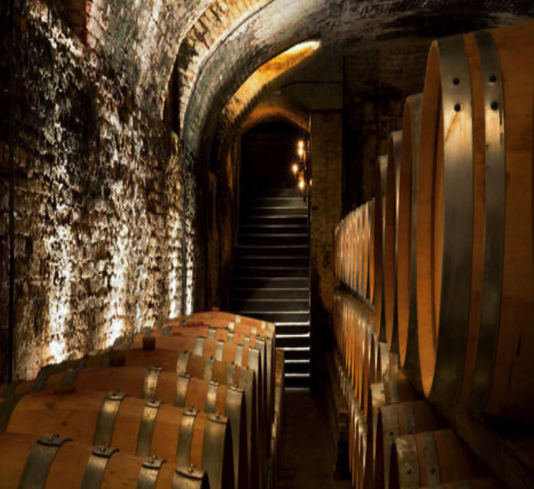
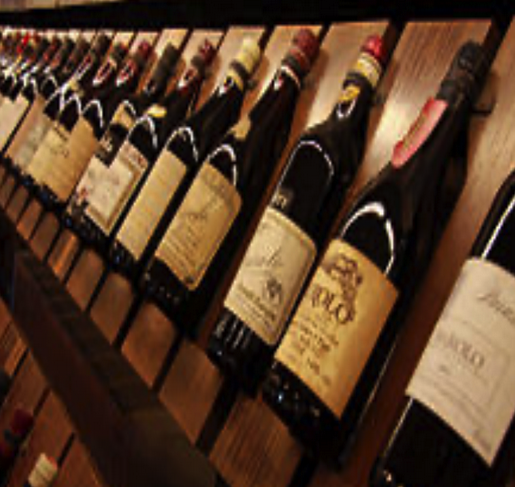
Barolo, produced in the province of Cuneo (Piemonte), is often described as one of Italy's greatest wines. It is noted for its ability to age and usually take on a rust red tinge as it matures. Barolo needs to be aged for at least 36 months after the harvest before release, of which at least 18 months must be in wood (barrels/casks). When aged for at least five years before release, the wine can be labeled as Riserva.
Interesting fact: Barolo Wars. In order to appeal to more modern international tastes, those that prefer fruitier, earlier-drinking wine styles, several producers began to cut fermentation times to a maximum of ten days and age the wine in new French oak barriques (small barrels). "Traditionalists" have argued that the wines produced in this way are not recognizable as Barolo and taste more of new oak than of wine. The controversies between traditionalists and modernists have been called the "Barolo wars". We will attempt to taste both.
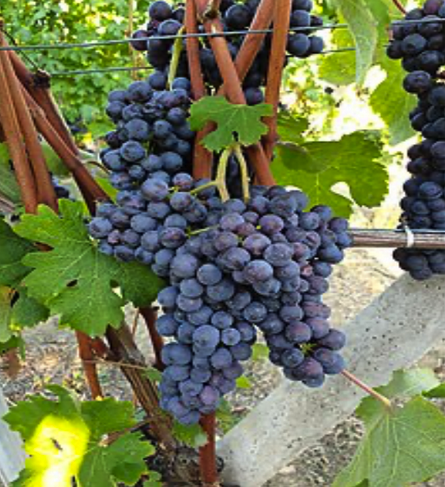
Barolos, produced from the 100% Nebbiolo grape, tend to be rich, deeply concentrated full-bodied wines with pronounced tannins and acidity. The wines are almost always lightly coloured varying from ruby to garnet in their youth to more brick and orange hues as they age. Barolos have the potential for a wide range of complex and exotic aromas with roses and tar being common notes. Other aromas include chocolate, dried fruit, leather, mulberries, plum, spice, tobacco, dry herbs, etc. The tannins of the wine add texture and serve to balance Barolo's moderate to high alcohol levels (minimum 13% but most often above 15% ABV (alcohol by volume)). We will also be tasting the Barbaresco wine often produced in the same wineries.
Food pairing. A big, powerful, tannic wine, Barolo needs to be paired with foods of similar weight. If paired with light dishes, it will overpower the food, its tannins will react accentuating the bitterness and drying the palate; it goes better with meat dishes, heavy pastas and rich risotti; the tannins will bind to the food proteins and will come across as softer.
Franciacorta
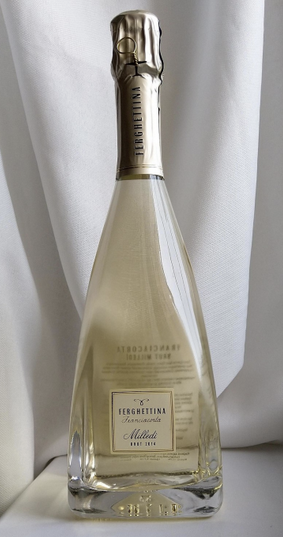
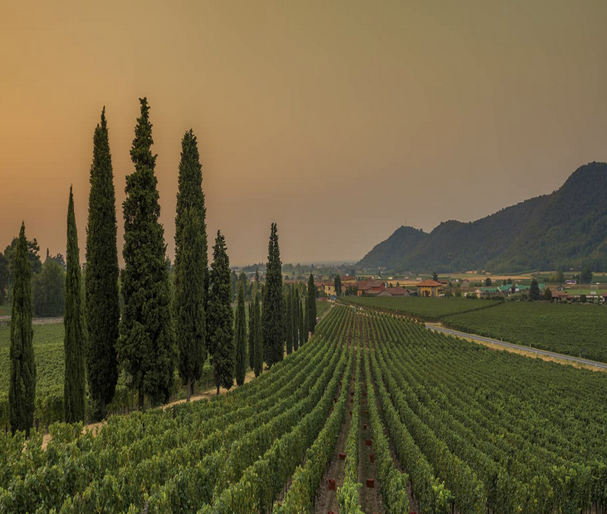
Franciacorta
Franciacorta is a sparkling wine from the Italian Province of Brescia (Lombardy) in the Franciacorta territory. It was awarded DOC status in 1967, and DOCG since 1995 exclusively to the sparkling wines. The still wines from this area have ancient traditions, referred to by Virgil and Pliny the Elder, and documented in Brescia City council books as "Franzacurta" as far back as in 1277. Monks were historically major Franciacorta winemakers, while winemaking was practiced by Gauls, Romans, and Lombards before them.
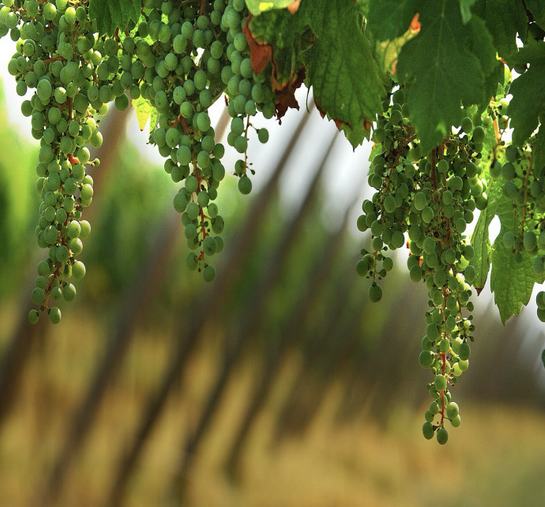
In 1990, the Consorzio per la tutela del Franciacorta was formed, instigating codes of self-regulation with a gradual reduction of yields and elimination of the use of Pinot grigio, and now strictly made up of a blend of 85% Chardonnay, 10% Pinot nero, and 5% Pinot bianco. Since 2019, Erbamat, a native white grape characterised by a late ripening and high acidity, has been introduced to fight the effect of climate change. A Franciacorta rosé must contain at least 15% Pinot nero, and may be made by blending red wine.
Franciacorta became the first DOC in Italy to specify that its sparkling wines must be made by metodo classico (champenoise). Franciacorta, Champagne, and Cava are all classic method wines produced in different countries, respectively Italy, France, and Spain. One of their main differences is the length of the second fermentation, where the wine ferments on its own lees (the sediment of a liquor during fermentation and aging). Franciacorta requires a minimum of 18 months, Champagne a minimum of 12, and Cava 9 months for non-vintage (wines not from a specific year). The longer the second fermentation, the better, the more elegant, with a softer bubble, is the wine. Other versions of the wine can only be released only 25 and 37 months after harvest.
Food pairing. These are three local dishes paired with the wine; you will notice they are cheese based and pasta dishes like Casoncelli bresciani which is a traditional, stuffed pasta dish from Brescia. Tortellini in brodo is a traditional Bologna pasta dish that consists of little packets of meat-filled pasta served in a golden capon broth, with grated Parmigiano Reggiano cheese. Tomino is a cow cheese best served as an appetizer, ideally grilled and accompanied by vegetables on the side.
Amarone
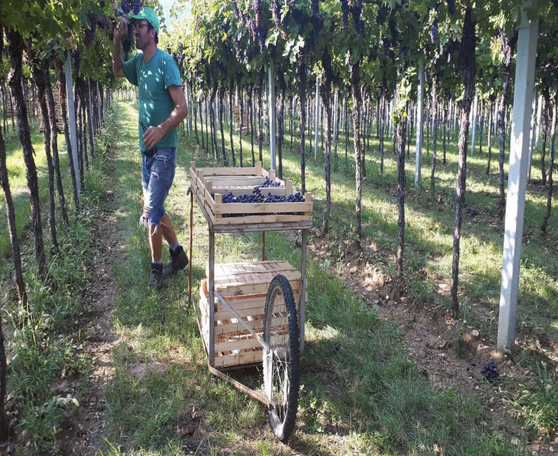
Amarone
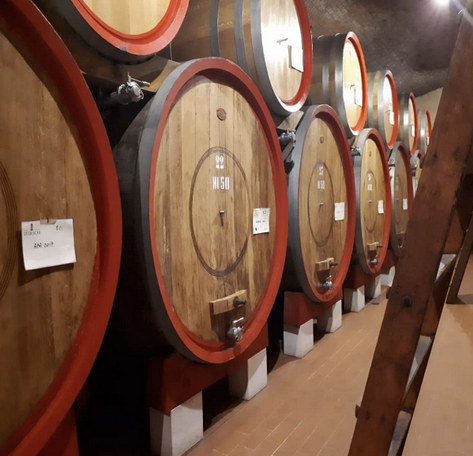
Amarone della Valpolicella, usually known as Amarone, is an Italian DOCG denomination of typically rich dry red wine made from the partially dried grapes of various indigenous varieties, with the signature grape, Corvina (45–95%), of which up to 50% could be substituted with Corvinone, Rondinella (5–30%) and other approved red grape varieties (up to 25%). Amarone is produced exclusively in Valpolicella, a wine region located a few kilometers from Verona (Veneto). Today it is considered one of the great Italian reds, an iconic wine such as Barolo, Brunello, and the Supertuscans. Notable wines have been produced in Valpolicella since ancient (>2000 years) times, but the Verona wine was not marketed as Amarone before 1953. The wine was assigned DOC status in December 1990, and DOCG in 2009.
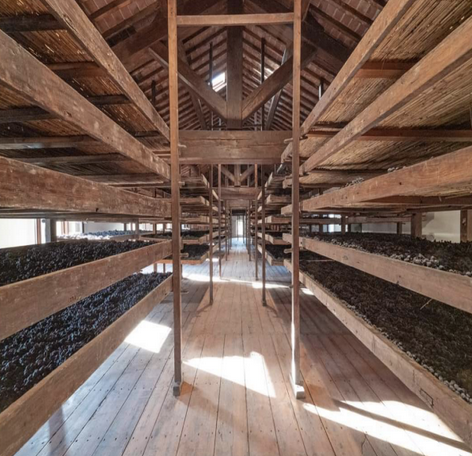
The complex vinification process is quite different from most other wines. Grapes are harvested ripe in the first two weeks of October (several weeks after most other wines) using traditional methods, little changed over 2000 years ago, by carefully choosing only by hand, bunches having fruits not too close to each other, to let air flow through them once the grapes are dried. Grapes are allowed to dry traditionally on bamboo racks but more commonly now in plastic or wooden crates. This process is called appassimento or rasinate (to dry and shrivel). This concentrates the remaining sugars and flavours thanks to the water evaporation. The pomace left over from pressing off the Amarone is used in the production of Ripasso Valpolicellas.
Modern Amarone is produced in special drying chambers under controlled conditions. This approach minimizes the amount of handling of the grapes and helps prevent the onset of Botrytis cinerea. The process of desiccation, which takes up to 120 days depending on the winery, not only concentrates the juices within the grape, but also increases the skin contact of the grapes which contributes to the overall balance of the finished wine.
After fermentation, the wine must undergo a period of ageing in wood (barrels, casks) of at least 2 years. If fermentation is stopped early, the resulting wine will contain residual sugar and produce a sweeter wine known as Recioto della Valpolicella. The final result of the sugars concentrating is a very ripe, raisiny, full-bodied wine with very little acid. Alcohol content easily surpasses 15% (the legal minimum is 14%) and the resulting wine is rarely released until five years after the vintage.
The color of Amarone wine can be described as a brilliant and intense ruby red while the taste is complex and rounded as well as fruity and fresh, especially towards the end. The older the wine is, the better it tastes. Its aromas can be described as a strong mixture of blackberries, black cherries, and plums.
Food pairing: Amarone is the perfect wine to match various dishes such as game or various types of braised meats as well as a large range of stronger cheeses. Although Amarone is not usually recommended for menus including fish, many people seem to believe it is a great match for dishes which include sushi. Amarone, however, is the perfect match for most dishes which include meat, especially red ones, as well as some traditional Italian recipes such as risotto and many types of pasta.
Prosecco
Prosecco
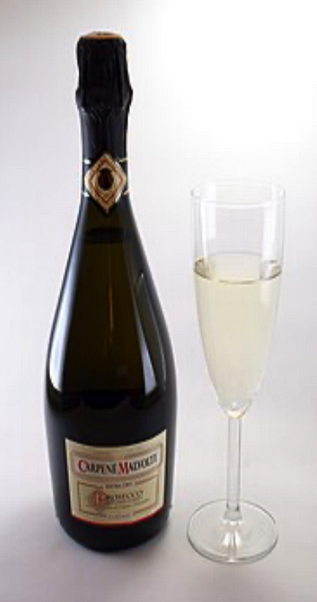
The well-known and loved "bubbly" wine is produced only in the area of Conegliano Valdobbiadene, a hilly countryside situated 50 km from Venice. Vine-growing has ancient origins, but the first written document linking Prosecco to this area dates to a poem of 1754, called "Il Roccolo Ditirambo" written by Valeriano Canati.
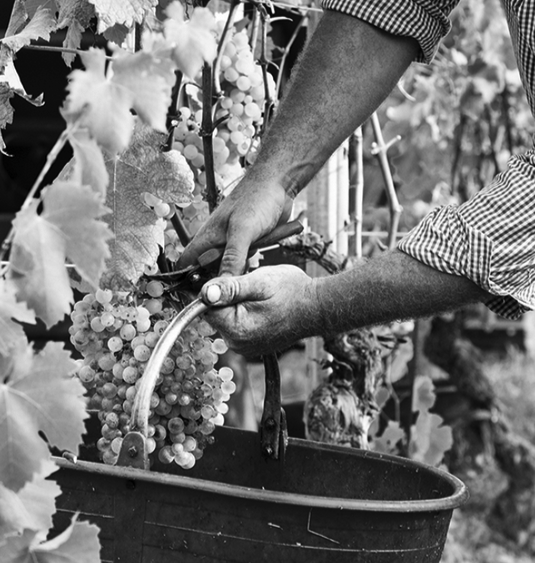
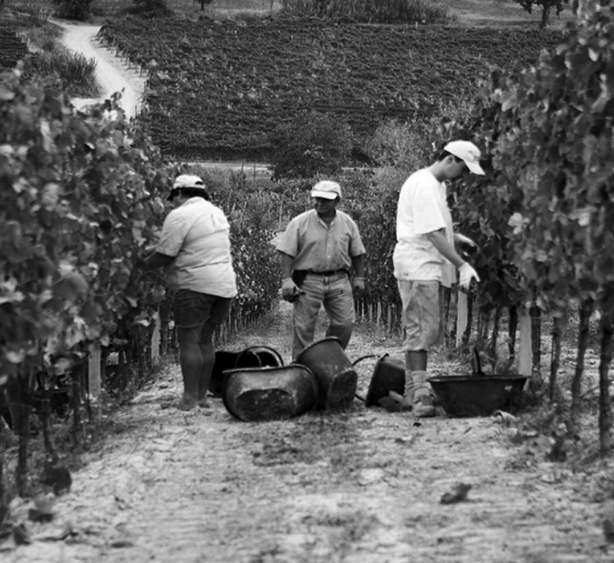
The Glera grape, extremely delicate because of its thin skin, is manually harvested in September when it reaches the correct degree of ripeness. The selected grapes undergo a light and gentle pressing to extract the must which is then filtered, clarified, and left to settle in steel tanks for the first alcoholic fermentation with the addition of natural yeasts. After an evaluation of the vintage and the fermentation, a second fermentation process is carried out in steel pressurised vats (Charmat method). This method can last from thirty days to six months, depending on how long it takes the yeasts to form a more persistent perlage (the quality of the bubbles).
In 2019, Le Colline del Prosecco di Conegliano e Valdobbiadene was designated a UNESCO World Heritage Site, in large part due to the region's role in the production of Prosecco. Since 2020, the DOCG rules allow a Rosé variety of Prosecco designated spumante rosé, which must contain Glera blended with 10–15% Pinot noir. We will visit Cartizze, a small hilly area in Valdobbiadene that extends for only 108 hectares, where the prestigious sparkling wine called Prosecco DOCG Superiore di Cartizze is produced. It is a selection of small vineyards, enclosed in only 1 square kilometer, with approximately 140 producers.
Prosecco is taken as an aperitivo (pre-meal drink/cocktail), often with hors d'oeuvres.
Great Wines of Tuscany
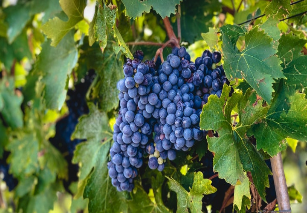
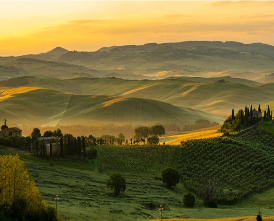
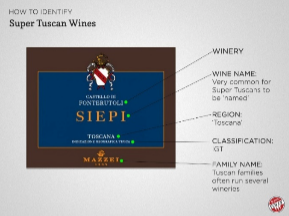
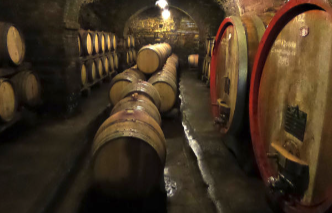
Great Wines of Tuscany
The description of the five best-known Tuscan wines we will concentrate our tours on, are described below and include their history, terroir, components (aromas, textures and flavours), vinification, and suggested pairing. Most wineries produce other wines which we will also be tasting.
Super Tuscans
We start the wine descriptions with the Super Tuscans because these wines tell a story of wine production in the region, with a revolt among the producers wishing to improve the quality of their wines but excessive government regulations prevented it. In the end the producers won their battle, and in that and parallel processes, the overall quality of many Tuscan wine was considerably improved to world-class high-quality wines, the most important of which we will visit for tasting.
The term Super Tuscan was coined in the early 1980s to describe a red blend from Tuscany. What makes it different from other Tuscan wines (like Chianti) is they use of a small proportion of grapes that are non-indigenous to Italy, mostly French varieties, particularly Merlot, Cabernet Sauvignon, and Syrah.
The creation of Super Tuscan wines resulted from the frustration winemakers felt during the 1970s towards a slow bureaucracy that did not permit changes to Italy's wine laws. Winemakers began mixing 'unsanctioned' wine varieties (like Merlot) into their blends to make higher-quality wines. The legal system eventually yielded in 1992 with the creation of IGT - Indicazione Geografica Tipica, a new designation that gave winemakers the ability to be more creative.
Tuscan IGT: what qualifies a Super Tuscan? The only regional stipulation in place to qualify as a Super Tuscan is that all wines must come from an IGT vineyard within Tuscany. Any wine made of a single or blend of grape varieties that doesn't fit the requirements for Chianti but are still made from a Tuscan IGT could be classed a Super Tuscan. IGTs can include, among others Maremma, Bolgheri (one of the top wines, which we will visit) and Toscana.
Tasting notes. As blends can vary wildly depending on the producer, wine and area of Tuscany, it would be hard to come up with an absolute definitive tasting note. Generally Super Tuscans refer to red wines and incorporate varying blends or single varietal wines of Cabernet Sauvignon, Merlot, Syrah, Petit Verdot, Cabernet Franc and mostly Sangiovese. Different producers use different varietals in different styles and proportions, so flavours naturally differ depending on the grapes and the percentages used.
In general, notes of both red and black fruit with classic Bordeaux flavors of red cherry, plum, cassis and oaked notes of cedar, vanilla and tobacco can be found in most Super Tuscans. The juxtaposition of red and black fruit is a strong indicator of a Super Tuscan as Sangiovese alone will only ever have red fruit notes so the presence of black fruit strongly signals that an international varietal like Cabernet Sauvignon or Syrah is in the blend.
Statistics. There are six IGTs in Tuscany where Super Tuscans can be made. DOCs, of which there are 41, and DOCGs, of which there are 11, are higher stamps of quality but are generally reserved for Italy's traditional wine styles. More than half of Tuscany is planted to Sangiovese which is used both in Super Tuscans and traditional wines like Chianti and Brunello di Montalcino.
Terroir and Vinification: Perhaps more than any other style of wine, specific producers and wines have been essential to the evolution of Super Tuscans. As the vinification and blends can vary wine to wine, it is at the producer's or even consumer's discretion to declare a wine a Super Tuscan, a member of this shifting but powerful club.
Pairing: Super Tuscan wines are generally well-structured powerful reds, and can vary greatly in taste, so it is advisable to experiment when pairing. All of the wines from Tuscany will pair well with a nice meat and cheese plate – especially with regional cheeses such as Pecorino. Tuscany is known for its delicious foods, so this wine can be paired with regional cuisines such as rich sausage and white bean dishes, braised beef or veal dishes, or anything abundant amounts of garlic and rosemary. Vegetarian dishes that have body like Portobello mushrooms stuffed with cheese also provide a worthy match.
Sources: https://principecorsini.com/; https://getsimplypaired.com/super-tuscan-pairings/; The New Sotheby's Wine Encyclopedia, Stevensons and Szentkiralyi, 2020.
Brunello di Montalcino
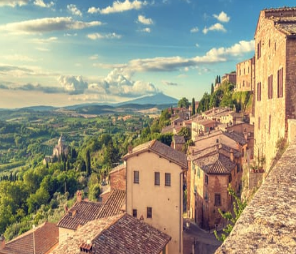
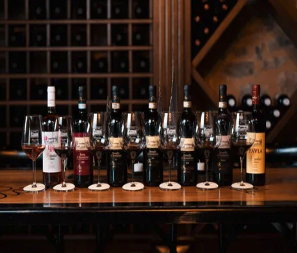
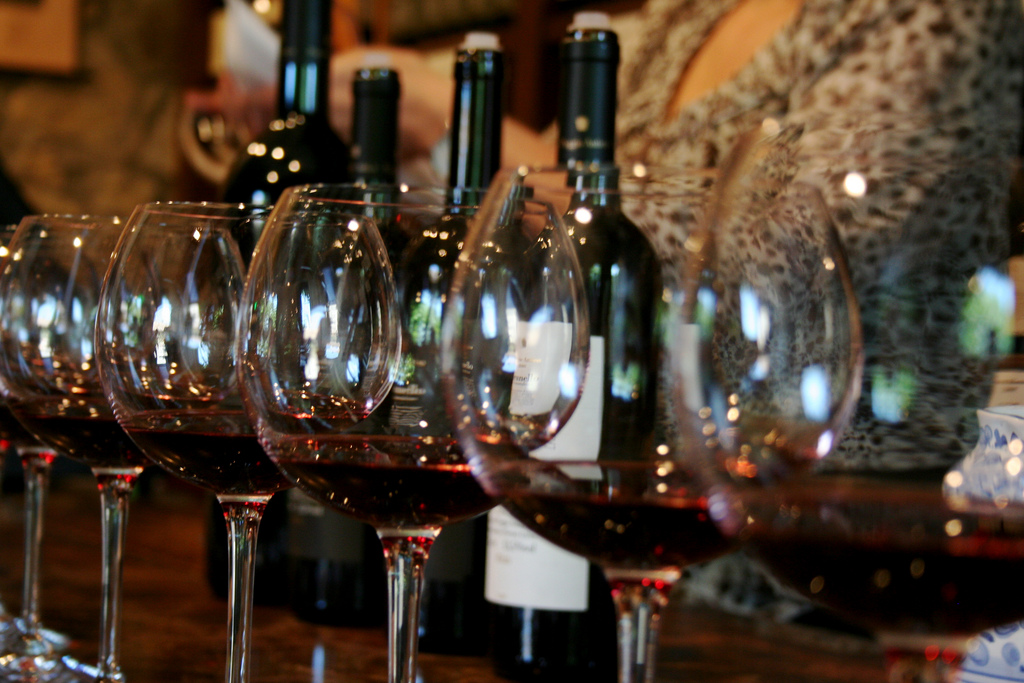
Brunello di Montalcino is a red DOCG Italian wine produced in the vineyards surrounding the town of Montalcino, in the province of Siena, located about 80 km south of Florence. One of the first records of "Brunello" was a red wine that was made in the Montalcino area in the early 14th century. By the end of World War II, Brunello di Montalcino had developed a reputation as one of Italy's rarest and most prestigious wines. The first recorded commercial producer was the Biondi-Santi firm, which had declared only four vintages up to that point—1888, 1891, 1925, and 1945. By the turn of the 21st century, there were nearly 200 producers of Brunello di Montalcino, mostly small farmers and family estates, together producing nearly 330,000 cases a year.
Brunello, a diminutive of bruno (lit. 'brown'), is the name that was given locally to what was believed to be an individual grape variety grown in Montalcino – Sangiovese Grosso. In 1980, Brunello was among the four wines awarded the first denominazione di origine controllata e garantita (DOCG) designation.
Terroir and tasting notes. The town of Montalcino is a small medieval village located about 564 metres above sea level. Vineyards in Montalcino are planted in varied soils—including limestone, clay, schist, volcanic soil and a crumbly marl known as galestro—at altitudes ranging from 150 m to 500 m. The Sangiovese grape is the only permitted grape in the Brunello DOCG. The altitude and climate of the Montalcino region has provided an area where Sangiovese ripens more fully and consistently than anywhere else in Tuscany. Common aromas and flavors: blackberry, black cherry, black raspberry, chocolate, leather, violets, black pepper, earth, flowers, tar, smoke, menthol.
Vinification. The wine goes through an extended maceration period. Following fermentation, the wine is aged in large Slavonian oak casks. Wines are aged 3 years or more in bottle. The Normale bottles are released on the market 50 months after harvest and the Riserva are released a year afterward.
Pairing. The high acidity of Brunellos allows it to pair well with food, especially grilled meat and game: stewed and braised game dishes, wild boar, guinea fowl, duck, roast veal and pork, heavy pastas, Tuscan steak, beef stroganoff, oxtail, beef wellington, game in mushroom sauce. It is appropriate with very mature rich cheeses.
Sources: The New Sotheby's Wine Encyclopedia, Stevensons and Szentkiralyi, 2020; L'Encyclopedia del Vino, Boroli Editore, 2011.
Chianti Classico
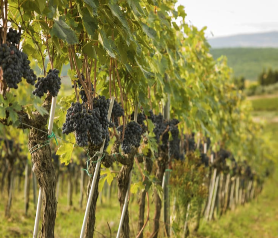
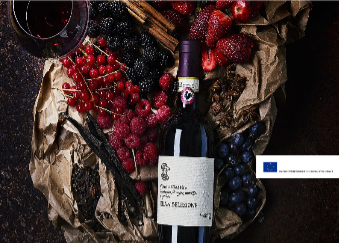
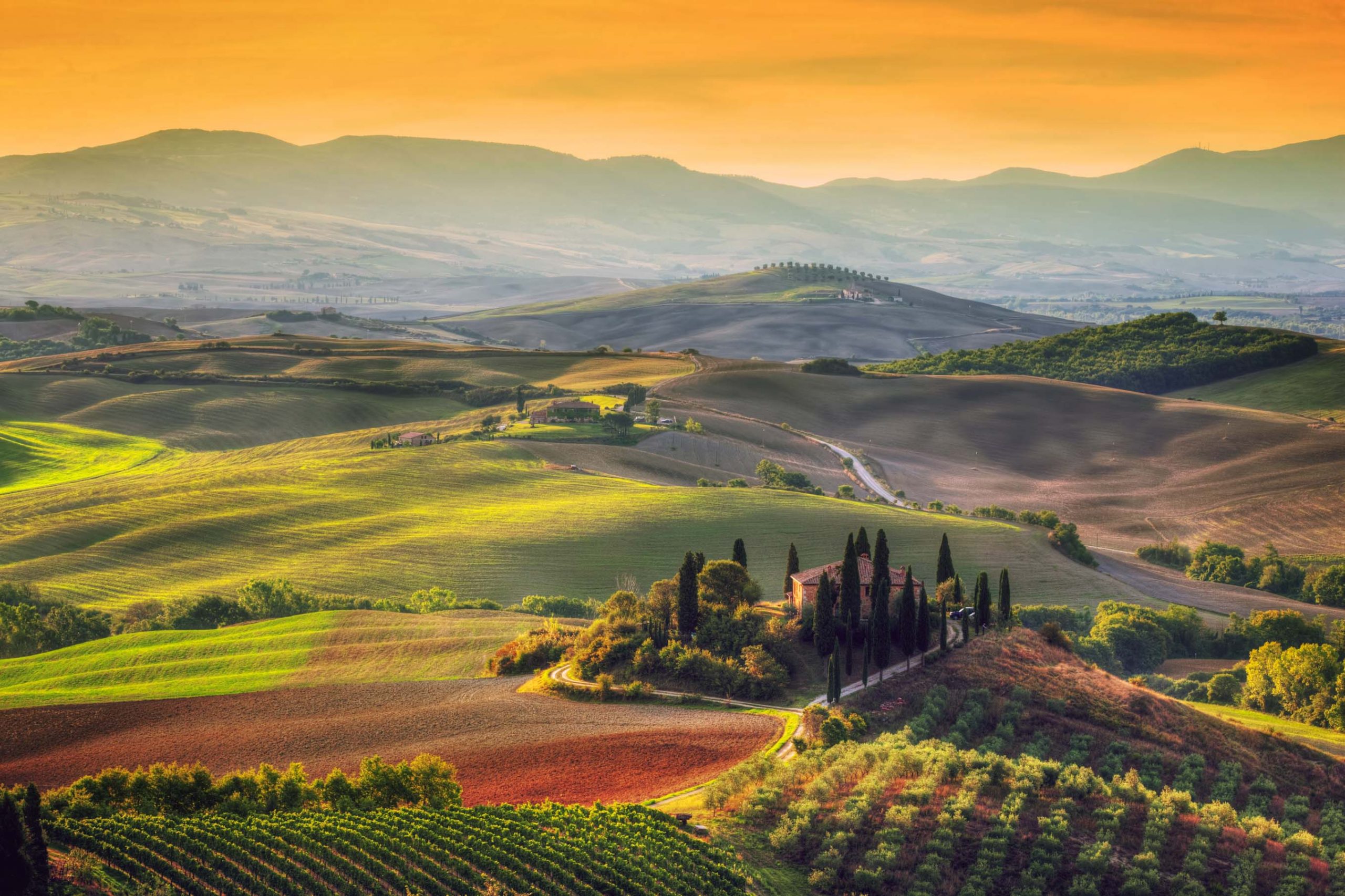
Chianti was an area contested between Florence and Siena for much of the Middle Ages. Its was first mentioned in 1398 in an official document. Since 1565 the Black Rooster as an Allegory for Chianti appears in Florence's Palazzo Vecchio. In 1716 the link between wine and territory was formalised when the boundaries established by the Grand Duke of Tuscany Cosimo Medici III were established. These remain in place to today for the Chianti Classico wines still represented by the black rooster. The first Italian wine producer Consortium was formed in 1924. It reached DOC and then DOCG quality levels in 1984. Chianti Classico is now only produced with red wines, of which Sangiovese must be up to 80%, although up to 100% is also permitted. In 2014 a new type of Chianti Classico is created, of yet higher quality – the Chianti Classico Gran Selezione, which must be produced exclusively from estate grown grapes and aged at least 30 months.
Terroir: Soils that are partly sandstone and partly silty clayey, with a rich presence of ancient seashells and marl. Altitudes of the vineyards range from 240 to just over 500 mts. From the facets of exposure, altitudes and soils – alberese, galestro, macigno toscano, clay – the infinite potential of the region's flagship grape variety, Sangiovese, emerges.
Pairing and tasting notes. Chianti is ruby red, tending to garnet and often exudes violet flower and crunchy red-berried fruit, or dried herbs and a smoky, spicy profile. Mouthfeel is agile, thanks to crisp and firm tannins. Because of its marked acidity, Chianti pairs brilliantly with tomato sauces, pizza and pasta bakes such as lasagne, ribollita soup, simple grill or roast, burger. Chianti wine is essential to Italian cuisine, often being used to accompany pasta or a meat and cheese board.
Sources: https://www.chianticlassico.com/en/; The New Sotheby's Wine Encyclopedia, Stevensons and Szentkiralyi, 2020.
Vino Nobile di Montepulciano
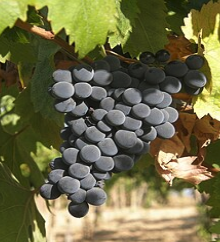
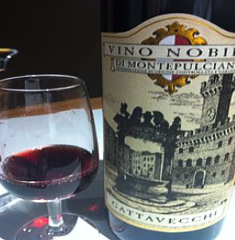
Wine from this region was first mentioned in 789. Vino Nobile di Montepulciano is a red wine with a DOCG status (on July 1st 1980, Vino Nobile became the first wine in Italy to be thusly adorned, produced in the vineyards surrounding the town of Montepulciano). The wine is made primarily from the Sangiovese grape varietal (known locally as Prugnolo gentile - minimum 70%), blended with Canaiolo Nero (10%–20%) and small amounts of other local varieties such as Mammolo. The wine is aged for 2 years (at least 1 year in oak barrels); three years if it is a riserva.
Terroir. The vineyards are located at an altitude between 250 and 600 meters above sea level. The Mediterranean climate with continental influences, characterized by hot summers and cold winters, contributes to the optimal ripening of the grapes. The high percentage of sand in the soil promotes aromatic expressions and tannic refinement.
Pairing and tasting notes. Vino Nobile di Montepulciano DOCG has an intense ruby red color, tending towards garnet with aging. It has an intense and sometimes ethereal aroma, with characteristic fruity notes of black cherry, floral notes of violet and spices. On the palate it is very structured, balanced and elegant. Vino Nobile di Montepulciano pairs best with aged, medium-cooked steaks, game birds, mushroom dishes, rich pastas, stews, and wild boar.
Sources: https://www.consorziovinonobile.it/en/; L'Encyclopedia del Vino, Boroli Editore, 2011.
Vernaccia di San Gimignano
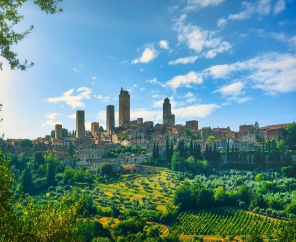
At the end of the thirteenth century it appears in Europe on the tables of kings, popes, rich merchants and in the fourteenth century it obtains an extraordinary widespread success. The history of literature reports a crescendo of admirers: from Cecco Angiolieri to Dante (mentioned in the Divina Comedy), Boccaccio and the Medicis. Michelangelo Buonarroti wrote his "L'Aione", in 1643, celebrating the Vernaccia di San Gimignano: "Bacia, lecca, morde, picca e punge" (It kisses, licks, bites, pinches, and stings). This dry white wine was the first-ever DOC in Italy in 1966, and became DOCG in 1993. The best Vernaccias have always been deliciously crisp and full of vibrant fruit. Its signature austere texture has resulted in the Vernaccia often referred to as a disguised red wine.
Terroir: San Gimignano covers 5600 hectares in the hilly territory of Val d'Elsa. The soils are those formed on marine Pliocene deposits and made up of yellow sands (tuff) and yellow clays. Most of the vineyards are below 500 mts altitude. Vernaccia di San Gimignano can be produced with a minimum of 85% up to 100% of Vernaccia grapes.
Tasting Notes: it is a straw yellow wine with golden reflections. The aroma is fine, delicate with fruity and floral hints when young. With refinement and aging it develops the characteristic mineral hint of flint. On the palate it is a dry, harmonious, savoury wine. The final hint of almond is characteristic.
Pairings: It is a wine that is enhanced by gastronomic pairings: perfect with fish, extraordinary and surprising with white meats, vegetables, Tuscan ham, "ribollita" soup and many summer dishes.
Sources: https://vernaccia.it/; The New Sotheby's Wine Encyclopedia, Stevensons and Szentkiralyi, 2020.
Ready to taste these wines in person?
Join one of our tours through Italy's greatest wine regions and experience the terroir firsthand.